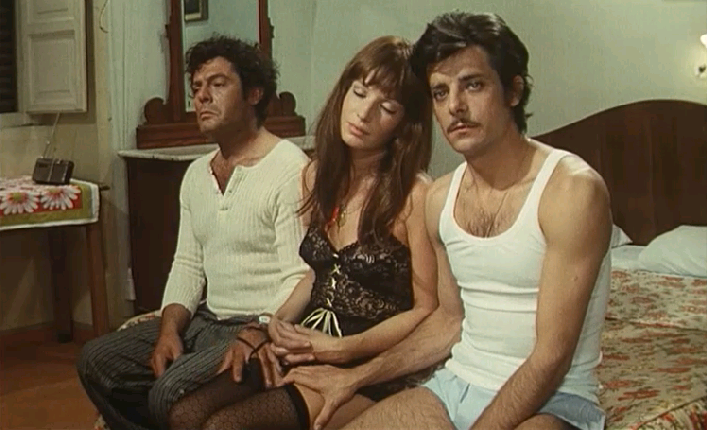
Jealousy, Italian Style: A Triangular Tango of Love and Lust

ist-pasion.com – Ettore Scola’s 1970 film, Jealousy, Italian Style, is a comedic exploration of love, lust, and the complexities of human relationships. It delves into the tumultuous world of a love triangle involving Oreste (Marcello Mastroianni), a working-class Communist, his lover Adelaide (Monica Vitti), a florist, and Nello (Giancarlo Giannini), a charismatic pizza maker. The film, a classic example of the Commedia all’italiana genre, is a satirical take on Italian society, its morals, and its quirks.   

A Love Triangle Gone Awry

The film begins with Oreste, a man deeply committed to his political beliefs, falling head over heels for the alluring Adelaide. Their passionate affair, however, takes an unexpected turn when Nello, a charming and virile pizzaiolo, enters the picture. Adelaide, drawn to Nello’s youthful energy and charisma, finds herself torn between the two men.   

A Satirical Look at Italian Society

Jealousy, Italian Style is more than just a romantic comedy; it is a biting satire of Italian society. Scola uses the love triangle as a vehicle to explore various social issues, such as class differences, the hypocrisy of morality, and the impact of consumerism. The film’s humor often derives from the juxtaposition of the characters’ lofty ideals and their base desires.   

The Power of Jealousy

Jealousy is the central theme of the film. It is a powerful emotion that drives the characters’ actions and ultimately leads to a series of comic misunderstandings and dramatic confrontations. The film explores the destructive nature of jealousy and its ability to consume individuals and relationships.

A Visual Feast

In addition to its witty script and strong performances, Jealousy, Italian Style is visually stunning. The film’s vibrant colors, stylish costumes, and picturesque Roman settings create a captivating atmosphere. The cinematography is particularly impressive, with many scenes showcasing the beauty of the Italian capital.

A Timeless Classic

Jealousy, Italian Style remains a timeless classic due to its universal themes and its enduring humor. The film’s exploration of love, lust, and jealousy is as relevant today as it was in 1970. It is a must-watch for fans of Italian cinema and anyone who appreciates a good laugh.

Conclusion

Ettore Scola’s Jealousy, Italian Style is a delightful and thought-provoking film that offers a humorous and insightful look at human nature. Its witty script, strong performances, and stylish visuals make it a truly unforgettable cinematic experience.


Architecture 101: A Blueprint of First Love & Lingering Memories

ist-pasion.com – “Architecture 101” (건축학개론, Geonchukhakgaeron), a 2012 South Korean romantic drama film directed by Lee Yong-ju, is a nostalgic and tender exploration of first love, memory, and the enduring impact of the past on the present. The film cleverly interweaves two timelines, showcasing the blossoming romance of two architecture students in the 1990s and their reunion fifteen years later.   

Two Timelines, One Shared Memory

The film opens in the present day, where Seung-min (Uhm Tae-woong as the older Seung-min, Lee Je-hoon as the younger Seung-min), now an architect, is approached by Seo-yeon (Han Ga-in as the older Seo-yeon, Bae Suzy as the younger Seo-yeon), his first love from university. She commissions him to renovate her childhood home on Jeju Island. This encounter triggers a flood of memories, transporting both the characters and the audience back to their university days in the mid-90s.   

The film seamlessly transitions between these two timelines, allowing viewers to witness the development of their relationship in the past and the lingering effects of their shared experiences in the present.

The Innocence of First Love in the 90s

The 1990s timeline depicts the awkward yet endearing interactions between Seung-min and Seo-yeon as they navigate their first year of architecture studies. Seung-min, a shy and introverted student, is immediately captivated by Seo-yeon’s outgoing and vibrant personality. They bond over shared projects, late-night study sessions, and casual conversations, gradually developing a deep affection for each other.

The film beautifully captures the essence of first love: the nervous excitement, the hesitant gestures, the unspoken feelings, and the pain of miscommunication. The 90s setting, with its retro fashion, music, and technology, adds a layer of nostalgia and authenticity to their story.

A Reunion and the Weight of the Past

In the present timeline, Seung-min and Seo-yeon’s reunion is marked by a mixture of nostalgia, regret, and unresolved feelings. As they work together on the renovation project, they are forced to confront their shared past and the reasons why their relationship ended.

The film explores the idea that first love often leaves an indelible mark, shaping our future relationships and influencing our perceptions of ourselves. The renovation of Seo-yeon’s childhood home becomes a symbolic process of revisiting and reconstructing their shared memories.

Themes of Memory, Nostalgia, and Unrequited Love

“Architecture 101” delves into several key themes:

  • The Power of Memory: The film emphasizes the enduring impact of memories, particularly those associated with first love. Even after fifteen years, the memories of Seung-min and Seo-yeon’s time together still hold a powerful emotional charge.
  • Nostalgia and the Passage of Time: The film evokes a strong sense of nostalgia for the 90s, capturing the cultural atmosphere and technological landscape of that era. It also reflects on the passage of time and how it changes us.   
  • Unrequited Love and Missed Opportunities: The film explores the theme of unrequited love and the regret that can arise from missed opportunities. Seung-min’s shyness and insecurity prevent him from fully expressing his feelings for Seo-yeon in the past, leading to a sense of what could have been.
  • The Healing Power of Time: While the film acknowledges the pain of past experiences, it also suggests that time can have a healing effect, allowing us to gain perspective and move forward.

A Relatable and Touching Story

“Architecture 101” is a relatable and touching story that resonates with audiences who have experienced the joys and sorrows of first love. The film’s realistic portrayal of human relationships, its evocative atmosphere, and its strong performances have made it a beloved Korean romantic classic. It’s a gentle reminder of the enduring power of memory and the lasting impact of our first encounters with love.

So Young (2013): A Nostalgic Journey Through Youth & Love

ist-pasion.com – “So Young” (致我们终将逝去的青春), released in 2013, is a Chinese coming-of-age romantic drama that captured the hearts of audiences with its poignant storytelling and relatable themes. Directed by Zhao Wei in her directorial debut, the film is an adaptation of the popular novel by Xin Yiwu. It delves into the complexities of youth, love, and the inevitable passage of time.

Plot Summary

“So Young” follows the life of Zheng Wei, a spirited young woman who enters college with dreams and aspirations. The film chronicles her experiences as she navigates friendships, romantic entanglements, and personal growth. Zheng Wei’s journey is marked by her love for Chen Xiaozheng, a brilliant but emotionally distant architecture student, and her complicated friendship with her roommate, Ruan Guan. As the characters confront the challenges of adulthood, the film explores themes of ambition, heartbreak, and the bittersweet nostalgia of youth.

Critical Reception

The film was well-received for its authentic portrayal of university life and its ability to evoke emotions through its narrative and characters. Zhao Wei’s direction was praised for capturing the essence of youthful exuberance and the nostalgic longing for simpler times. The performances, particularly those of the lead actors, contributed to the film’s emotional depth and resonance with audiences.

Impact on Chinese Cinema

“So Young” was a commercial success, resonating with both young audiences and those nostalgic for their own college days. It sparked a trend of coming-of-age films in China, highlighting the universal appeal of stories about youth and self-discovery. The film’s success solidified Zhao Wei’s reputation as a talented director and demonstrated the potential of literary adaptations in Chinese cinema.

Conclusion

“So Young” remains an enduring favorite, celebrated for its heartfelt exploration of the joys and sorrows of growing up. Its portrayal of love and friendship, set against the backdrop of a rapidly changing society, continues to resonate with viewers, making it a significant work in the landscape of modern Chinese film.

The Fault in Our Stars: A Poignant Journey of Love and Resilience

ist-pasion.com – “The Fault in Our Stars,” a novel by John Green, has touched the hearts of millions with its compelling story of love, illness, and the human spirit. Published in 2012, this modern classic follows the lives of two teenagers, Hazel Grace Lancaster and Augustus Waters, who meet at a cancer support group and embark on a life-altering journey together. The novel explores themes of love, mortality, and the search for meaning in life.

The Characters: Hazel and Augustus

At the heart of the novel are its protagonists, Hazel and Augustus. Hazel, a sixteen-year-old with thyroid cancer that has spread to her lungs, is a thoughtful and introspective character who often contemplates the meaning of life and death. Augustus, a charming and optimistic cancer survivor, brings a sense of adventure and hope into Hazel’s life. Their relationship is central to the narrative, showcasing the transformative power of love.

The Meeting: A Chance Encounter

Hazel and Augustus meet at a cancer support group, where their connection is instant and profound. Despite their shared experiences with illness, they bring different perspectives to their relationship. Augustus’s zest for life and desire to leave a mark on the world contrasts with Hazel’s more cautious and pragmatic outlook. This dynamic sets the stage for their emotional journey.

The Journey: Amsterdam and Beyond

A pivotal part of the novel is the trip to Amsterdam, where Hazel and Augustus seek answers from Peter Van Houten, the reclusive author of Hazel’s favorite book, “An Imperial Affliction.” The journey represents their quest for closure and understanding, both in the context of the book and their own lives. The trip is filled with moments of beauty and heartbreak, deepening their bond and challenging their perceptions of love and mortality.

The Themes: Love, Loss, and Legacy

“The Fault in Our Stars” delves into profound themes that resonate with readers of all ages. Love is portrayed as a powerful force that transcends the physical limitations imposed by illness. The novel also confronts the inevitability of loss, highlighting the importance of cherishing each moment. Through Hazel and Augustus’s story, readers are encouraged to consider what it means to leave a legacy and how to find meaning in the face of adversity.

The Conclusion: A Lasting Impact

The novel’s conclusion is both heartrending and uplifting, leaving readers with a sense of hope and reflection. Augustus’s passing is a devastating loss, yet it underscores the novel’s message about the enduring impact of love and human connection. Hazel’s journey of self-discovery and acceptance serves as a reminder of the resilience of the human spirit.

Conclusion: A Modern Classic

“The Fault in Our Stars” is a poignant and beautifully written novel that captures the complexities of life, love, and loss. John Green’s masterful storytelling and memorable characters have made this book a beloved modern classic. Through its exploration of deep and universal themes, the novel continues to inspire and resonate with readers, reminding us all of the power of love and the importance of living life to the fullest.