Dark Water (2002) – A Chilling Tale of Motherhood

ist-pasion.com – Released in 2002 and directed by Hideo Nakata, Dark Water (Honogurai Mizu no soko kara) is a gripping psychological horror film that blends supernatural elements with an emotionally resonant story of motherhood and abandonment. Based on a short story by Koji Suzuki, who also penned Ringu, Dark Water is widely regarded as one of the finest examples of J-horror. Known for its eerie atmosphere, slow-burn tension, and deep emotional core, the film explores the haunting consequences of neglect, loss, and unresolved trauma, all set against the backdrop of a decrepit apartment building with a dark secret.

Plot Overview: A Mother’s Desperate Struggle

Dark Water follows Yoshimi Matsubara, a recently divorced mother fighting for custody of her young daughter, Ikuko. As Yoshimi tries to rebuild her life, she moves with Ikuko into a dilapidated apartment building. From the outset, it is clear that something is wrong with the building—particularly a dark water stain that mysteriously appears on the ceiling of their apartment, growing larger and more ominous as time goes on.

The situation becomes more unsettling as Yoshimi begins to experience strange occurrences, including the frequent appearance of a red children’s bag and ghostly figures. She learns that a young girl named Mitsuko disappeared from the building years earlier, and it becomes apparent that her spirit may be haunting the place. As Yoshimi tries to protect her daughter from the growing supernatural threat, her own psychological state begins to unravel.

Throughout the film, Yoshimi’s mental and emotional struggles are central to the narrative. She is haunted not only by the specter of Mitsuko but also by the fear of losing Ikuko, mirroring her own traumatic childhood experiences with an absent mother. As the supernatural forces close in, Yoshimi is forced to confront both the literal ghost haunting her apartment and the figurative ghosts of her past.

Themes: Abandonment, Motherhood, and Grief

At its core, Dark Water is a story about the bond between a mother and her child, and the profound effects that neglect and abandonment can have on both the living and the dead. Yoshimi’s fear of losing custody of Ikuko is compounded by her memories of her own neglectful mother, and the film draws a parallel between her experience and that of Mitsuko, the ghostly girl who was abandoned by her parents and ultimately lost.

Mitsuko’s restless spirit serves as a haunting reminder of the destructive power of abandonment and the emotional scars it leaves behind. Her presence is not so much malevolent as it is tragic—she is a lost soul, yearning for the care and love she was denied in life. The dark water that seeps through the apartment building is symbolic of the unresolved trauma that floods the characters’ lives, slowly consuming them.

Yoshimi’s struggle to protect Ikuko from the supernatural forces also reflects her own battle with guilt and fear. Her determination to shield her daughter from harm echoes her desire to break the cycle of abandonment, yet her worsening mental state and the mounting supernatural threat raise the question of whether she will succeed or fall victim to the same fate that befell Mitsuko’s mother.

The film also touches on broader themes of societal neglect, as the dilapidated apartment building represents the decay and isolation that can occur in urban environments. The building’s neglect mirrors the emotional neglect experienced by the characters, creating a sense of both physical and psychological deterioration.

Atmosphere and Cinematic Style: A Subtle, Slow-Burn Horror

Hideo Nakata, who previously directed Ringu, brings a similar slow-burn approach to Dark Water. The film is defined by its quiet tension, eerie visuals, and restrained use of horror elements. Rather than relying on jump scares or overt supernatural encounters, Nakata builds a sense of dread through the gradual accumulation of strange, unsettling details—the dark water stain that won’t go away, the mysterious red bag that reappears despite being thrown away, and the oppressive, claustrophobic atmosphere of the apartment building.

The film’s setting is integral to its atmosphere. The rundown, water-damaged apartment building becomes a character in itself, its dark, damp corridors and leaking ceilings serving as a visual representation of the emotional decay at the heart of the story. The incessant presence of water—whether dripping from the ceiling, flooding rooms, or pooling ominously—adds to the feeling of slow, inevitable suffocation.

Nakata’s use of sound is equally important in creating tension. The soundtrack is sparse, often giving way to the sound of dripping water, creaking pipes, or eerie silence. This minimalistic approach amplifies the sense of isolation and dread, making even the smallest disturbances feel unnerving.

The ghosts in Dark Water are not the grotesque, violent specters of many horror films. Instead, they are sad, almost sympathetic figures, trapped in their own loneliness and despair. Mitsuko’s appearances are subtle yet haunting, her presence felt even when she isn’t fully visible. This understated approach to the supernatural aligns with the film’s focus on psychological horror, allowing the emotional weight of the story to take precedence over traditional scare tactics.

Symbolism of Water: Decay, Trauma, and Memory

Water is a central motif throughout Dark Water, symbolizing both the physical decay of the apartment building and the emotional trauma of the characters. The ever-present water leakage in the building is a manifestation of the unresolved grief and guilt that permeates the film. It represents the slow but relentless creep of past traumas into the present, as well as the inescapability of loss and abandonment.

For Yoshimi, the water becomes a literal and symbolic threat. It floods her apartment, disrupts her attempts at stability, and serves as a reminder of her inability to control her circumstances. The spreading water stain on the ceiling is a constant reminder of the unresolved pain she carries, as well as the growing influence of the supernatural forces at work.

At the same time, water is also linked to memory and the past. The ghost of Mitsuko, often associated with water, represents the lingering impact of forgotten or neglected souls—those who have been metaphorically “drowned” by their abandonment. Just as water can seep into the foundations of a building and weaken it over time, so too can the emotional weight of the past erode the foundations of one’s psyche.

Influence and Legacy: A Standout in J-Horror

Dark Water was released at the height of the J-horror wave that took the world by storm in the late 1990s and early 2000s, alongside films like Ringu and Ju-on: The Grudge. While it may not have achieved the same level of international fame as some of its contemporaries, Dark Water has been praised for its emotional depth, psychological complexity, and atmospheric horror.

The film’s emphasis on motherhood and emotional trauma sets it apart from many other horror films, making it a more poignant and introspective experience. Its subtle, slow-building tension and focus on character development have influenced later horror films, both in Japan and internationally. An American remake, Dark Water (2005), was produced but lacked the same emotional resonance and nuanced storytelling of the original.

Conclusion: A Haunting Exploration of Loss and Fear

Dark Water is more than just a ghost story—it is a deeply emotional exploration of motherhood, loss, and the fear of abandonment. Hideo Nakata’s masterful direction and the film’s haunting atmosphere create a slow-burn horror experience that lingers long after the credits roll. By intertwining supernatural horror with the psychological struggles of its characters, Dark Water offers a poignant and chilling reflection on the emotional scars left by neglect and unresolved trauma.

For fans of J-horror and atmospheric psychological thrillers, Dark Water remains a standout film that exemplifies the genre’s ability to evoke both fear and empathy, offering a haunting experience that resonates on multiple levels.
Throne of Blood (1957): directed by Akira Kurosawa

ist-pasion.com – Throne of Blood (1957), directed by Akira Kurosawa, is a masterful reimagining of William Shakespeare’s Macbeth, transplanted into the context of feudal Japan. Set in the war-torn landscape of 16th-century Japan, the film blends Kurosawa’s distinct cinematic vision with Shakespeare’s timeless tale of ambition, guilt, and betrayal. With Toshiro Mifune in the lead role of Washizu, a samurai lord analogous to Macbeth, Throne of Blood is a visually striking and thematically rich adaptation that draws on the elements of both Japanese Noh theater and Western tragedy.

Kurosawa’s Throne of Blood stands as one of the most successful and influential adaptations of Shakespeare’s work, showcasing his ability to take a classic story and filter it through the lens of Japanese culture, while maintaining the core themes of fate, ambition, and the destructive nature of power. The film is renowned not only for its evocative performances and atmospheric direction but also for its striking visual style and innovative approach to storytelling.

Plot Overview: Ambition and Betrayal in Feudal Japan

The story of Throne of Blood follows Washizu (Toshiro Mifune), a loyal samurai warrior in the service of Lord Tsuzuki, who encounters a mysterious spirit in the forest. The spirit, reminiscent of the witches in Macbeth, prophesies that Washizu will rise to power, first by becoming the lord of the castle and then by overthrowing his master. This prophecy ignites Washizu’s ambition, and, driven by his wife Asaji (Isuzu Yamada), he murders his lord and takes control of the castle. Asaji, like Lady Macbeth, urges Washizu to take further violent actions to secure his power, even as the consequences of his betrayal begin to unravel his mind.

However, the prophecy does not unfold exactly as expected. As Washizu attempts to secure his throne, he finds himself haunted by guilt and paranoia. The castle, once a symbol of power, becomes a place of despair, as his ambitious actions lead to his ultimate downfall. The film builds toward a tragic climax, where the forces of fate, human nature, and guilt converge, resulting in Washizu’s inevitable demise.

The film’s plot, while closely following the arc of Macbeth, is infused with Japanese cultural references and the philosophical beliefs of the samurai code. The themes of destiny, loyalty, and personal honor are explored within the context of a feudal society, making Throne of Blood both a compelling adaptation of Shakespeare and a distinctive work of Japanese cinema.

Kurosawa’s Vision: The Fusion of Noh Theater and Cinema

One of the most striking aspects of Throne of Blood is Kurosawa’s integration of traditional Japanese Noh theater into the film’s visual and dramatic style. Noh theater, known for its slow, deliberate movement and stylized performances, is reflected in the film’s use of long, almost ritualistic shots, especially during the pivotal moments when characters like Washizu are overwhelmed by guilt or paranoia. The film’s deliberate pacing and the use of minimalistic, almost haunting sets draw inspiration from Noh’s austerity, creating a sense of foreboding that heightens the tragic atmosphere of the narrative.

The Noh influence is most apparent in the performances of Toshiro Mifune and Isuzu Yamada, whose portrayals of Washizu and Asaji are marked by restrained emotion and formalized gestures. Mifune, in particular, embodies the character of Washizu with a compelling mix of stoic resolve and inner turmoil, capturing the essence of a man slowly unraveling under the weight of his own ambition and guilt. Yamada’s Asaji, similarly, exudes an eerie calm, using her controlled demeanor to manipulate her husband into committing the heinous acts that will ultimately destroy them both.

Kurosawa’s collaboration with his cinematographer, Asakazu Nakai, also contributes to the film’s sense of otherworldly stillness. The stark, fog-covered landscapes and the towering, empty castles emphasize the desolation that comes with the pursuit of power. The visuals are not merely beautiful but also deeply symbolic, with each frame conveying the existential isolation of the characters, especially Washizu as he becomes increasingly alienated from both his own conscience and the world around him.

Thematic Exploration: Ambition, Guilt, and the Nature of Power

At its core, Throne of Blood is a profound exploration of the dangers of unchecked ambition, the corrupting influence of power, and the psychological effects of guilt. Like Macbeth, Washizu is a man who is initially loyal and dutiful but is ultimately consumed by his desire for power. The film examines how ambition drives him to betrayal, murder, and ultimately self-destruction. As Washizu’s power grows, so too does his paranoia and guilt, which slowly erode his mental state and sense of reality.

The film delves into the cyclical nature of ambition, portraying Washizu as a tragic figure caught in a web of fate and his own desires. While he believes he can control his destiny through murder and treachery, he is ultimately a victim of the same forces he sought to manipulate. Kurosawa’s portrayal of Washizu’s downfall highlights the idea that power, when gained through violence and deceit, is fragile and ultimately unsustainable.

A key element of Throne of Blood is the way it reflects on the nature of fate and destiny. The prophecy delivered by the spirit mirrors the three witches in Macbeth, yet the film suggests that Washizu’s fate is not entirely predetermined. While the prophecy sets the stage for his rise to power, it is his own choices and actions—driven by his wife’s manipulation—that bring about his undoing. In this way, Throne of Blood challenges the notion of fate as a passive force, suggesting that human agency plays a crucial role in the tragic outcome.

The theme of loyalty and betrayal is also central to the film. Washizu’s actions, while driven by ambition, are rooted in a sense of betrayal against his lord and, eventually, against his own sense of self. His wife’s manipulation of his will reflects the corrosive nature of ambition, while his descent into madness illustrates how betrayal ultimately isolates the perpetrator, even from those closest to them.

Cinematic Innovation: The Use of Atmosphere and Visual Metaphor

Throne of Blood is also notable for its groundbreaking use of atmosphere, setting, and visual metaphor to enhance the psychological depth of the narrative. Kurosawa creates an ominous mood through the use of fog and dense forests, which serve as physical representations of the characters’ internal states. The ghostly fog that envelopes the forest during the film’s opening sequence is not only visually striking but also symbolic of the murky, uncertain future facing Washizu and his world. The oppressive environment of the castle, filled with stark, imposing architecture, further reinforces the sense of entrapment that Washizu feels as he spirals into guilt and madness.

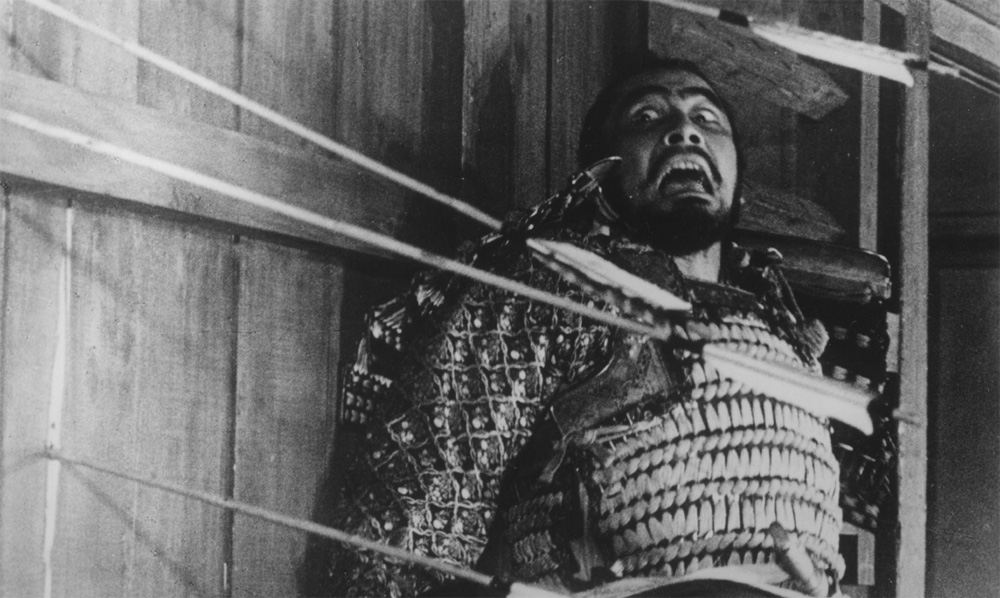
The climactic battle sequence, one of the most iconic scenes in Japanese cinema, is a perfect example of Kurosawa’s ability to use visual storytelling to heighten emotional and thematic impact. The film’s famous final scene, where Washizu is killed by arrows in the midst of a fog-covered battlefield, mirrors the film’s overall visual style, as the character meets his fate in an atmosphere of chaos and disillusionment. The arrows, which symbolize both the inevitability of fate and the consequences of his actions, rain down on Washizu in a visually stunning moment of poetic justice.

Legacy and Influence: An Enduring Masterpiece

Throne of Blood has had a profound impact on both Japanese cinema and global filmmaking. The film stands as one of Kurosawa’s greatest achievements and remains a timeless example of how classic literature can be effectively reinterpreted within a different cultural context. Kurosawa’s use of Noh theater elements, his exploration of the themes of ambition and guilt, and his innovative visual storytelling techniques have influenced generations of filmmakers across the world.

The film’s legacy extends beyond its initial impact in Japan, as it inspired filmmakers such as Martin Scorsese, George Lucas, and Francis Ford Coppola, all of whom have cited Kurosawa’s work as a significant influence on their own films. Throne of Blood continues to be a vital part of the cinematic canon, studied for its artistic merit, thematic depth, and masterful direction.

Conclusion: A Timeless Tragedy of Power and Fate

Throne of Blood (1957) remains one of Akira Kurosawa’s most revered films, seamlessly blending the timeless themes of Shakespeare’s Macbeth with the rich cultural heritage of Japan. Through its striking performances, innovative direction, and atmospheric cinematography, the film explores the corrupting effects of ambition, the inevitability of fate, and the destructive nature of power. Kurosawa’s ability to reimagine Shakespeare’s tragedy within a samurai context is a testament to his genius, and Throne of Blood continues to stand as a haunting, visually arresting meditation on the human condition.

Confessions (2010): A Dark Exploration of Revenge & Guilt

ist-pasion.com – Confessions (2010), directed by Tetsuya Nakashima, is a disturbing and emotionally charged psychological thriller that explores the depths of human anger, guilt, and revenge. Based on the novel by Kanae Minato, Confessions takes the audience on a harrowing journey through the lives of its central characters, examining the devastating consequences of crime, the complexity of justice, and the consequences of unaddressed trauma. Known for its dark themes and intricate narrative, the film received widespread acclaim for its compelling storytelling and powerful performances.

Confessions is often praised for its emotional intensity and narrative structure, which blends elements of mystery, thriller, and tragedy. With its tightly woven plot, striking visual style, and shocking revelations, the film has garnered both critical and commercial success, becoming one of the most memorable Japanese films of the 2010s.

Plot Overview

The story of Confessions centers on Yuko Moriguchi (played by Takako Matsu), a middle school teacher whose life is turned upside down after the tragic death of her 4-year-old daughter, Manami. Manami’s death is ruled as an accident, but Yuko soon learns that the truth behind her daughter’s death is far darker than she could have imagined. She discovers that two of her students, Shuya and Naoki, were responsible for the murder of her daughter, and their crime was covered up by their classmates and the school administration.

Yuko, consumed by grief and a desire for revenge, takes matters into her own hands. In an emotionally charged class session, she reveals to her students that she knows the truth about her daughter’s death and that she has meticulously planned her own form of justice. Yuko’s confession sets off a chain reaction, as the lives of the students involved in the crime spiral out of control. Through a series of confessions, the film reveals the dark motivations, hidden secrets, and moral dilemmas of each character, creating a complex web of guilt, remorse, and vengeance.

The film’s narrative unfolds through multiple perspectives, each character offering their own viewpoint on the events that led to Manami’s death and the impact of Yuko’s revelations. As the story progresses, the audience is led to question the nature of justice, the reliability of personal perception, and the devastating consequences of secrets left uncovered.

Themes: Revenge, Guilt, and the Impact of Trauma

Revenge as a Form of Justice

The central theme of Confessions is revenge, which drives the entire narrative. Yuko Moriguchi’s decision to seek justice for her daughter’s murder in her own way raises important questions about the moral implications of revenge and the limits of the law. While the justice system fails to deliver any real consequences for the two students responsible for her daughter’s death, Yuko takes matters into her own hands, seeking a form of closure that the law cannot provide.

Throughout the film, Yuko’s actions are depicted as both tragic and deeply human. She is not merely seeking vengeance for the sake of vengeance; her desire for justice is fueled by the overwhelming grief of losing her daughter. However, as the story progresses, the question of whether her actions are truly justified becomes more complicated. Yuko’s plan for revenge has far-reaching consequences for everyone involved, including the students, their families, and even herself.

The film explores the idea that revenge, while seemingly a form of justice, can often perpetuate a cycle of pain and destruction, leading to irreversible consequences. The characters in Confessions struggle with their own sense of justice, and the film ultimately suggests that seeking revenge may not offer the closure one expects, but only deepen the emotional wounds.

Guilt and Accountability

Another major theme in Confessions is guilt, particularly how the characters cope with the weight of their actions and the burden of their secrets. The film highlights how guilt can manifest in different ways, whether as emotional numbness, denial, or an obsessive need to atone for past wrongs.

The two boys responsible for Manami’s death—Shuya and Naoki—are depicted as complex characters with their own moral dilemmas. While their crime is horrific, the film offers insight into their backgrounds and the factors that led them to commit the act. Shuya, for instance, is shown as a deeply troubled individual, motivated by a mix of anger, alienation, and a desire for attention. Meanwhile, Naoki is portrayed as a more passive participant, someone who goes along with Shuya’s plans but struggles with his conscience afterward.

Yuko’s own guilt is also a key element of the story. While she feels justified in her quest for revenge, she also grapples with the fact that her actions may be just as damaging as those of the students who murdered her daughter. The film suggests that guilt is not simply about the acknowledgment of wrongdoing but is deeply tied to the need for recognition, confession, and atonement.

The theme of guilt is intertwined with the idea of accountability. Each character in Confessions is forced to confront their role in the tragedy, whether as a perpetrator or an enabler. The film’s structure, which shifts between different characters’ perspectives, underscores how guilt can be subjective, with each individual seeing the events through their own lens of experience.

Trauma and Its Consequences

The film also delves into the lasting effects of trauma, particularly how it shapes the lives of those involved. Yuko’s trauma is evident in her obsessive desire for revenge, and her inability to move on from the loss of her daughter. Her actions are a direct response to the emotional scars left by her daughter’s death, and the film explores how trauma can distort one’s sense of reality and morality.

The trauma experienced by the students involved in the crime also plays a significant role in the narrative. While they may not have directly faced the same level of emotional devastation as Yuko, their own lives are forever changed by the events. As the truth behind Manami’s death is revealed, it becomes clear that the characters are all trapped by the consequences of their actions, unable to escape the psychological and emotional scars of the past.

The film suggests that trauma is not something that can simply be “fixed” or erased. The characters must learn to confront their pasts and take responsibility for their actions, even as they struggle with feelings of shame and regret.

Cinematic Style and Visuals

Tetsuya Nakashima’s direction in Confessions is marked by its meticulous attention to detail and its use of striking visual imagery to amplify the emotional impact of the story. The film’s visual style is both haunting and elegant, with a blend of cold, clinical shots and rich, vibrant colors that evoke a sense of unease. The cinematography, by Shoichi Ato, uses close-ups and slow-motion sequences to emphasize the emotional intensity of the characters’ confessions and the psychological depth of the film.

One of the most distinctive features of Confessions is its non-linear narrative, which unfolds through multiple viewpoints and fragmented storytelling. The film shifts between the perspectives of different characters, allowing the audience to see the events from various angles and providing insight into the motivations and emotions of each individual. This structure enhances the complexity of the narrative, revealing new layers of the story with each confession.

The soundtrack, composed by Keiichi Suzuki, further adds to the film’s atmosphere. The music is often haunting, with a mix of minimalist piano pieces and more dramatic orchestral scores that punctuate key emotional moments. The film’s use of sound and silence is deliberate, creating a sense of tension and unease that mirrors the psychological states of the characters.

Reception and Legacy

Confessions received critical acclaim upon its release, with praise directed at its sharp direction, strong performances, and its exploration of complex themes. Takako Matsu’s portrayal of Yuko was widely lauded for its depth and emotional range, and the film’s gripping narrative kept audiences on the edge of their seats. The film’s success extended beyond Japan, earning international recognition and winning several awards, including Best Film at the Japanese Academy Awards.

The film’s dark, thought-provoking themes and its haunting atmosphere have made Confessions a standout entry in the psychological thriller genre. It has been compared to other works of Asian cinema that explore the complexities of revenge and guilt, such as Oldboy (2003) and The Chaser (2008). Confessions stands out, however, for its unique narrative structure and its ability to make the audience question the nature of justice and morality.

Confessions also influenced a new wave of Japanese thrillers and psychological dramas, establishing Tetsuya Nakashima as one of the leading directors of his generation. His ability to weave intricate narratives with emotional depth and shocking revelations has earned him a reputation as a master of psychological storytelling.

Conclusion

Confessions (2010) is a masterfully crafted psychological thriller that explores themes of revenge, guilt, and trauma with emotional intensity and intellectual depth. Tetsuya Nakashima’s direction, combined with strong performances and a complex narrative, creates a film that is both thought-provoking and deeply unsettling. By focusing on the consequences of crime and the moral ambiguities of justice, Confessions forces the audience to confront difficult questions about human nature and the cost of vengeance. As a work of psychological horror and drama, it remains one of the most impactful and memorable films of the 2010s.

Last of the Red Hot Lovers: Bobbi Michele & the Pursuit of Passion

ist-pasion.com – Last of the Red Hot Lovers (1972), directed by Gene Saks, is a comedy based on Neil Simon’s Broadway play that explores themes of desire, middle age, and self-discovery. The film stars Neil Simon himself as the protagonist, Barney Cashman, a middle-aged man trying to rekindle the passion and excitement of his youth. One of the central characters who helps Barney along this journey is Bobbi Michele, portrayed by [insert actress’s name]. Bobbi is an important figure in the film, representing the contrast between the disillusioned past and the uninhibited present as Barney tries to live out a fantasy of sexual freedom. Bobbi’s character adds a layer of complexity to the film’s humorous but poignant exploration of identity, relationships, and the complexities of human nature.

Plot Overview: Barney’s Quest for Passion

Last of the Red Hot Lovers follows the story of Barney Cashman, a 47-year-old, somewhat conservative and repressed man who seeks to break free from the confines of his suburban life and spice things up with an affair. Barney is married to his wife, who is somewhat indifferent to their sex life, and he feels increasingly disconnected from the world around him. In a bid to recapture the excitement of youth, Barney arranges a series of encounters with different women in an effort to experience the world of passion he has missed out on.

Bobbi Michele, played by [insert actress’s name], is one of the women Barney meets in his search for adventure. Bobbi is an eccentric, free-spirited woman who contrasts sharply with Barney’s own personality. She embodies the type of passionate, uninhibited character that Barney fantasizes about, and her presence in the film becomes central to his attempt to rediscover a side of himself he feels he has lost.

Bobbi Michele: The Free Spirit Who Challenges Barney’s World

Bobbi Michele is an integral character in Last of the Red Hot Lovers, offering a stark contrast to Barney’s stifled existence. Unlike Barney, Bobbi is a liberated woman who embraces her sexuality and is unencumbered by the inhibitions that define much of his life. She is confident, bold, and unapologetic, and it is through her that Barney hopes to fulfill his fantasies of freedom and passion.

Bobbi’s character is far from conventional, and her unconventional behavior and outlook challenge Barney’s perceptions of relationships and intimacy. While Barney seeks an escape from the mundanity of his life through an affair, Bobbi represents the possibility of living authentically without constraints. However, her liberated nature also exposes the fragility of Barney’s expectations, as the encounter with Bobbi does not fulfill the idealized vision of passion he had hoped for.

Bobbi’s interaction with Barney reveals the contradictions inherent in his quest. She is a character who embraces the freedom that Barney desires, yet the encounter with her exposes the complexities and misunderstandings that arise from the search for intimacy. Bobbi’s unapologetic nature and willingness to be herself make her a compelling presence in the film, as she pushes Barney to confront his own limitations and desires.

Themes of Aging, Identity, and Self-Discovery

At its core, Last of the Red Hot Lovers is a comedy about aging and self-discovery. Barney’s quest for passion reflects a deeper existential struggle to reclaim his identity and purpose as he approaches middle age. Through his encounters with Bobbi and the other women, Barney confronts the tensions between his desires and the reality of his life.

Bobbi’s character, with her vibrant personality and refusal to conform, serves as a catalyst for Barney’s exploration of his own identity. She represents the possibility of living without the restrictions that Barney perceives in his own life, yet their encounter ultimately serves to highlight the gap between fantasy and reality. In this way, Bobbi becomes a mirror for Barney’s own self-perception, forcing him to confront the limits of his desires and the complexities of his relationships.

The film also deals with the changing dynamics of love and attraction in middle age. Barney’s quest for passion is not just about the physical act of sex but about rediscovering a sense of excitement and possibility in his life. Bobbi’s role in the narrative emphasizes the tension between the idealized notions of youth and passion and the more complex, often disappointing realities of human connection.

The Comedy of Last of the Red Hot Lovers

Although Last of the Red Hot Lovers deals with serious themes such as aging, self-esteem, and the search for fulfillment, it does so through the lens of comedy. The humor arises from the awkwardness and misunderstandings that occur during Barney’s encounters with the women he meets. The film’s lighthearted tone contrasts with the deeper emotional currents running through the narrative.

Bobbi’s character, with her eccentric personality and no-nonsense attitude, provides a comedic foil to Barney’s nervousness and fumbling attempts at seduction. Her presence highlights the absurdity of Barney’s situation, as he finds himself out of his depth in a world that is foreign to him. The film uses these comedic moments to explore the complexities of human desire, relationships, and identity, offering both humor and insight into the human condition.

The Film’s Legacy and Bobbi Michele’s Impact

Last of the Red Hot Lovers remains a classic exploration of the challenges and humor inherent in the search for meaning and passion in middle age. The film’s emphasis on self-discovery, personal limitations, and the complexities of relationships resonates with audiences even today. While Barney is the central character, Bobbi Michele’s role is crucial in highlighting the contradictions and emotional depth of his journey.

Bobbi’s character serves as both a symbol of freedom and a reflection of the challenges that come with living authentically. Through her interactions with Barney, the film examines the gap between fantasy and reality, and how one’s expectations can shape, and sometimes distort, their understanding of themselves and their desires. Bobbi Michele’s impact on the film is lasting, as she is an essential part of Barney’s emotional and personal growth throughout the story.

Conclusion

Last of the Red Hot Lovers (1972) is a comedic exploration of aging, desire, and self-discovery, with Bobbi Michele playing a key role in Barney Cashman’s journey of personal transformation. As a free-spirited woman who challenges Barney’s perceptions of passion and intimacy, Bobbi becomes a catalyst for the exploration of deeper themes, including identity, relationships, and the complex nature of human connection. The film’s comedic approach, combined with its insightful examination of the human condition, makes Last of the Red Hot Lovers an enduring classic that resonates with audiences seeking both humor and heart in the exploration of life’s complexities.

Jealousy, Italian Style: A Triangular Tango of Love and Lust

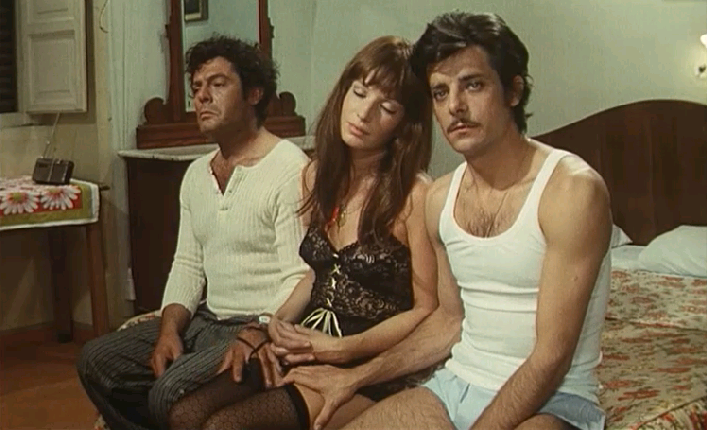
ist-pasion.com – Ettore Scola’s 1970 film, Jealousy, Italian Style, is a comedic exploration of love, lust, and the complexities of human relationships. It delves into the tumultuous world of a love triangle involving Oreste (Marcello Mastroianni), a working-class Communist, his lover Adelaide (Monica Vitti), a florist, and Nello (Giancarlo Giannini), a charismatic pizza maker. The film, a classic example of the Commedia all’italiana genre, is a satirical take on Italian society, its morals, and its quirks.   

A Love Triangle Gone Awry

The film begins with Oreste, a man deeply committed to his political beliefs, falling head over heels for the alluring Adelaide. Their passionate affair, however, takes an unexpected turn when Nello, a charming and virile pizzaiolo, enters the picture. Adelaide, drawn to Nello’s youthful energy and charisma, finds herself torn between the two men.   

A Satirical Look at Italian Society

Jealousy, Italian Style is more than just a romantic comedy; it is a biting satire of Italian society. Scola uses the love triangle as a vehicle to explore various social issues, such as class differences, the hypocrisy of morality, and the impact of consumerism. The film’s humor often derives from the juxtaposition of the characters’ lofty ideals and their base desires.   

The Power of Jealousy

Jealousy is the central theme of the film. It is a powerful emotion that drives the characters’ actions and ultimately leads to a series of comic misunderstandings and dramatic confrontations. The film explores the destructive nature of jealousy and its ability to consume individuals and relationships.

A Visual Feast

In addition to its witty script and strong performances, Jealousy, Italian Style is visually stunning. The film’s vibrant colors, stylish costumes, and picturesque Roman settings create a captivating atmosphere. The cinematography is particularly impressive, with many scenes showcasing the beauty of the Italian capital.

A Timeless Classic

Jealousy, Italian Style remains a timeless classic due to its universal themes and its enduring humor. The film’s exploration of love, lust, and jealousy is as relevant today as it was in 1970. It is a must-watch for fans of Italian cinema and anyone who appreciates a good laugh.

Conclusion

Ettore Scola’s Jealousy, Italian Style is a delightful and thought-provoking film that offers a humorous and insightful look at human nature. Its witty script, strong performances, and stylish visuals make it a truly unforgettable cinematic experience.

Architecture 101: A Blueprint of First Love & Lingering Memories

ist-pasion.com – “Architecture 101” (건축학개론, Geonchukhakgaeron), a 2012 South Korean romantic drama film directed by Lee Yong-ju, is a nostalgic and tender exploration of first love, memory, and the enduring impact of the past on the present. The film cleverly interweaves two timelines, showcasing the blossoming romance of two architecture students in the 1990s and their reunion fifteen years later.   

Two Timelines, One Shared Memory

The film opens in the present day, where Seung-min (Uhm Tae-woong as the older Seung-min, Lee Je-hoon as the younger Seung-min), now an architect, is approached by Seo-yeon (Han Ga-in as the older Seo-yeon, Bae Suzy as the younger Seo-yeon), his first love from university. She commissions him to renovate her childhood home on Jeju Island. This encounter triggers a flood of memories, transporting both the characters and the audience back to their university days in the mid-90s.   

The film seamlessly transitions between these two timelines, allowing viewers to witness the development of their relationship in the past and the lingering effects of their shared experiences in the present.

The Innocence of First Love in the 90s

The 1990s timeline depicts the awkward yet endearing interactions between Seung-min and Seo-yeon as they navigate their first year of architecture studies. Seung-min, a shy and introverted student, is immediately captivated by Seo-yeon’s outgoing and vibrant personality. They bond over shared projects, late-night study sessions, and casual conversations, gradually developing a deep affection for each other.

The film beautifully captures the essence of first love: the nervous excitement, the hesitant gestures, the unspoken feelings, and the pain of miscommunication. The 90s setting, with its retro fashion, music, and technology, adds a layer of nostalgia and authenticity to their story.

A Reunion and the Weight of the Past

In the present timeline, Seung-min and Seo-yeon’s reunion is marked by a mixture of nostalgia, regret, and unresolved feelings. As they work together on the renovation project, they are forced to confront their shared past and the reasons why their relationship ended.

The film explores the idea that first love often leaves an indelible mark, shaping our future relationships and influencing our perceptions of ourselves. The renovation of Seo-yeon’s childhood home becomes a symbolic process of revisiting and reconstructing their shared memories.

Themes of Memory, Nostalgia, and Unrequited Love

“Architecture 101” delves into several key themes:

  • The Power of Memory: The film emphasizes the enduring impact of memories, particularly those associated with first love. Even after fifteen years, the memories of Seung-min and Seo-yeon’s time together still hold a powerful emotional charge.
  • Nostalgia and the Passage of Time: The film evokes a strong sense of nostalgia for the 90s, capturing the cultural atmosphere and technological landscape of that era. It also reflects on the passage of time and how it changes us.   
  • Unrequited Love and Missed Opportunities: The film explores the theme of unrequited love and the regret that can arise from missed opportunities. Seung-min’s shyness and insecurity prevent him from fully expressing his feelings for Seo-yeon in the past, leading to a sense of what could have been.
  • The Healing Power of Time: While the film acknowledges the pain of past experiences, it also suggests that time can have a healing effect, allowing us to gain perspective and move forward.

A Relatable and Touching Story

“Architecture 101” is a relatable and touching story that resonates with audiences who have experienced the joys and sorrows of first love. The film’s realistic portrayal of human relationships, its evocative atmosphere, and its strong performances have made it a beloved Korean romantic classic. It’s a gentle reminder of the enduring power of memory and the lasting impact of our first encounters with love.

Exit: A Thrilling Disaster Comedy with a Heartfelt Core

ist-pasion.com – Exit (Korean: 엑시트; RR: Ekseiteu) is a 2019 South Korean disaster action comedy film directed by Lee Sang-geun. Unlike typical disaster films focused on large-scale destruction, Exit focuses on the struggles of ordinary people trying to escape a toxic gas attack in the heart of Seoul. It blends thrilling action sequences with witty humor and heartwarming family dynamics, creating a truly unique cinematic experience.   

A Relatable Protagonist: Yong-nam, the Unemployed Underdog   

The film centers around Lee Yong-nam (Jo Jung-suk), a perpetually unemployed man who still lives with his parents. He’s known for his impressive rock climbing skills from his university days, but he hasn’t been able to find a stable job. The story begins at his mother’s 70th birthday celebration, which is held at a convention hall.   

A Sudden Disaster Strikes: Toxic Gas Unleashed

During the celebration, a terrorist unleashes a mysterious white gas across downtown Seoul. The gas quickly spreads, forcing people to evacuate to higher ground. Yong-nam, using his climbing skills and knowledge of the city’s infrastructure, takes the lead in trying to save his family and others trapped in the building.   

Climbing for Survival: A Unique Action Element

What sets Exit apart is its unique approach to action. Instead of explosions and car chases, the film features thrilling climbing sequences as Yong-nam and his former climbing club junior, Eui-joo (Im Yoon-ah), navigate the city’s rooftops, walls, and construction sites to escape the rising gas. These scenes are incredibly suspenseful and visually engaging, showcasing the characters’ agility and determination.

Balancing Thrills with Humor and Heart

Exit masterfully balances the tension of the disaster with well-placed humor. The film doesn’t shy away from the seriousness of the situation, but it also finds moments of levity in the characters’ interactions and their often-clumsy attempts to survive. This balance prevents the film from becoming overly grim and makes it a more enjoyable viewing experience.   

Beyond the thrills and humor, Exit also emphasizes the importance of family and community. Yong-nam’s dedication to saving his family and the willingness of ordinary citizens to help each other in the face of danger adds a heartwarming layer to the narrative.

Strong Performances and Chemistry

Jo Jung-suk delivers a fantastic performance as the relatable and resourceful Yong-nam. He perfectly captures the character’s mix of desperation, determination, and humor. Im Yoon-ah also shines as Eui-joo, portraying a strong and capable woman who stands alongside Yong-nam in the face of adversity. The chemistry between the two leads is palpable, adding to the film’s emotional impact.

A Box Office Hit and Critical Acclaim

Exit was a massive commercial success in South Korea, becoming one of the highest-grossing films of 2019. It also received positive reviews from critics, who praised its unique premise, thrilling action sequences, well-balanced tone, and strong performances.

The Man Who Shot Liberty Valance: A Timeless Wester

ist-pasion.com – John Ford’s 1962 Western, The Man Who Shot Liberty Valance, is a complex and thought-provoking film that explores the themes of myth, reality, and the evolution of the American West. Set in the late 19th century, the film follows the story of a young, idealistic lawyer named Ransom Stoddard (James Stewart) who arrives in the rugged frontier town of Shinbone.

A Clash of Ideals

Stoddard, a man of books and principles, clashes with the rough-and-tumble world of the Wild West. He is quickly outmatched by the local bully, Liberty Valance (Lee Marvin), a ruthless gunslinger who terrorizes the town. Despite his initial hesitation, Stoddard is forced to confront Valance and defend the town’s residents.

The Role of Myth and Reality

A pivotal moment in the film occurs when a mysterious stranger, known only as the “Mysterious Rider” (John Wayne), intervenes in a confrontation between Stoddard and Valance. The Rider, a skilled gunslinger, effortlessly dispatches Valance, saving Stoddard’s life. This act of heroism becomes the stuff of legend, transforming Stoddard from a timid intellectual into a courageous hero.

However, as the years pass, the truth behind the myth begins to unravel. Stoddard, now a respected senator, returns to Shinbone for a funeral. He reflects on the events of the past and realizes that the legend of the “Mysterious Rider” has overshadowed his own contributions to the town. The film suggests that the myth, while often more appealing, may not always reflect the true nature of reality.

A Commentary on the American West

The Man Who Shot Liberty Valance offers a nuanced commentary on the American West. The film challenges the romanticized notion of the rugged individualist and the Wild West as a place of unbridled freedom. Instead, it portrays a complex and often violent society where progress and civilization are constantly at odds with the forces of lawlessness and chaos.

A Timeless Classic

John Ford’s masterful direction, combined with the strong performances of James Stewart, John Wayne, and Lee Marvin, elevate The Man Who Shot Liberty Valance to the status of a timeless classic. The film’s exploration of myth, reality, and the American West continues to resonate with audiences today. It is a poignant reminder that the stories we tell about ourselves can shape our understanding of the past and our aspirations for the future.

The Green Slime (1968): A Classic Sci-Fi Horror

ist-pasion.com – Released in 1968, “The Green Slime” is a classic science fiction horror film that blends elements of extraterrestrial invasion, monster horror, and disaster movie. Produced by Japanese studio Toho, the film is known for its imaginative special effects and its iconic titular creature.

A Deadly Mission to Space

The film begins with a team of astronauts on a mission to Mars. During their exploration, they encounter a mysterious green slime that attaches itself to their spacecraft. Upon returning to Earth, the slime begins to spread, infecting humans and transforming them into monstrous creatures.

As the slime continues to grow and multiply, it threatens to consume the entire planet. A group of scientists and military personnel work together to find a way to stop the alien menace before it’s too late.

A Visual Spectacle

“The Green Slime” is a visually stunning film, with impressive special effects for its time. The film’s iconic monster, the Green Slime, is a terrifying creature that is both slimy and menacing. The film’s set designs and creature effects are imaginative and contribute to its overall atmosphere of dread and suspense.

A Cult Classic

Despite its mixed reviews upon its initial release, “The Green Slime” has since gained a cult following. Its blend of science fiction, horror, and disaster movie elements, combined with its unique visual style, has made it a beloved classic among fans of the genre.

The film’s enduring popularity can be attributed to its timeless themes of environmentalism and the dangers of unchecked scientific progress. It serves as a cautionary tale about the destructive power of unchecked technology and the importance of protecting our planet.

A Must-Watch for Sci-Fi Fans

“The Green Slime” is a must-watch for fans of science fiction and horror. Its imaginative storytelling, stunning visuals, and iconic monster make it a truly unforgettable cinematic experience. Whether you’re a longtime fan of the genre or new to the world of sci-fi, “The Green Slime” is sure to entertain and frighten.

Lovers Like Us: A Whirlwind Romance

ist-pasion.com – Jean-Paul Rappeneau’s Lovers Like Us (1975) is a whimsical romantic comedy that captures the essence of a spontaneous and passionate love affair. The film stars the iconic duo of Catherine Deneuve and Yves Montand, whose chemistry ignites the screen.

A Chance Encounter, A Fated Romance

The film follows Nelly (Deneuve), a young woman who impulsively flees her engagement in Venezuela. Seeking refuge, she encounters Martin (Montand), a charming and charismatic perfumer who is also on the run from his own domestic life. Together, they embark on a whirlwind romance, traveling across Europe and sharing a series of unforgettable adventures.

A Celebration of Love and Freedom

Lovers Like Us is a celebration of love, freedom, and the thrill of the unknown. The film’s lighthearted tone and witty dialogue are perfectly complemented by the stunning cinematography, which captures the beauty of various European cities. Deneuve and Montand deliver captivating performances, bringing their characters to life with humor, passion, and vulnerability.

A Timeless Tale of Love

Despite its age, Lovers Like Us remains a timeless romantic comedy that continues to enchant audiences. Its exploration of love, passion, and the pursuit of happiness resonates with viewers of all generations. The film’s message that love can blossom in the most unexpected places is as relevant today as it was in the 1970s.

Whether you’re a fan of classic cinema or simply looking for a heartwarming and entertaining film, Lovers Like Us is a must-watch.

The Freeway Killings: The City of Angels

ist-pasion.com – Police Story: The Freeway Killings (1987) is a gripping crime drama that delves into the world of Los Angeles law enforcement as they hunt down a pair of psychotic killers terrorizing the city’s freeways. Directed by William A. Graham, the film stars Richard Crenna, Angie Dickinson, and Tony Lo Bianco.

A City Under Siege

The film follows seasoned detective Captain Bob Devers (Richard Crenna) and his determined partner, Officer Anne Cavanaugh (Angie Dickinson) as they race against time to apprehend the elusive killers. The city is gripped by fear as the body count rises, and the pressure mounts on the police force to bring the perpetrators to justice.

A Deep Dive into Police Life

Beyond the high-stakes chase, Police Story: The Freeway Killings offers a nuanced exploration of the challenges faced by law enforcement officers. The film delves into the personal lives of the detectives, highlighting the toll that their demanding jobs take on their families and relationships.

A Tense and Thrilling Narrative

The film’s gripping narrative, coupled with its intense action sequences and suspenseful moments, keeps viewers on the edge of their seats. The realistic portrayal of police work and the gritty atmosphere of 1980s Los Angeles add to the film’s authenticity.

A Stellar Cast and Strong Performances

The film benefits from a strong cast, with Richard Crenna and Angie Dickinson delivering powerful performances. Crenna’s portrayal of the seasoned detective is both commanding and empathetic, while Dickinson shines as the tough-as-nails cop with a heart of gold.

A Classic Crime Thriller

Police Story: The Freeway Killings is a classic crime thriller that continues to captivate audiences. Its blend of action, drama, and character-driven storytelling makes it a must-watch for fans of the genre. The film’s exploration of the complexities of police work and its gritty portrayal of urban crime remain relevant today.

The Seven Year Itch (1955): A Classic Romantic Comedy

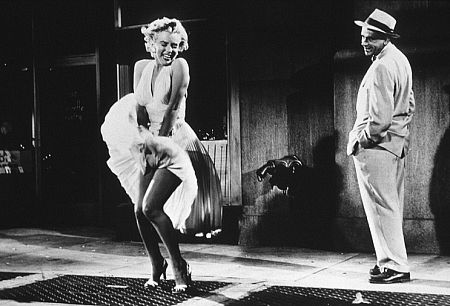
ist-pasion.com – “The Seven Year Itch” is a 1955 romantic comedy film directed by Billy Wilder, based on the successful Broadway play by George Axelrod. The film is renowned for its witty humor, iconic performances, and one of the most famous scenes in cinematic history, featuring Marilyn Monroe.

Plot Summary

The film centers around Richard Sherman, played by Tom Ewell, a middle-aged publishing executive living in New York City. With his wife and son away for the summer, Richard finds himself alone and battling temptation. His resolve is tested when he becomes infatuated with his attractive new neighbor, played by Marilyn Monroe, who is only referred to as “The Girl” in the film.

Iconic Scene

One of the defining moments of the movie is the scene where Marilyn Monroe stands over a subway grate, her white dress billowing in the air as a train passes underneath. This scene has become an enduring image in popular culture, symbolizing Monroe’s allure and the film’s playful exploration of desire and fidelity.

Themes and Analysis

“The Seven Year Itch” humorously explores themes of marriage, fidelity, and middle-class life in 1950s America. The title refers to a psychological term suggesting that individuals experience a desire for change or infidelity after seven years of marriage. The film uses Richard’s comedic inner monologues and fantasies to depict his struggles with temptation and guilt, offering a satirical look at the societal norms of the time.

Marilyn Monroe’s Performance

Marilyn Monroe delivers a memorable performance that captures both innocence and seduction, cementing her status as a Hollywood icon. Her character, although unnamed, serves as the catalyst for Richard’s introspection and comedic dilemmas, showcasing Monroe’s talent for blending charm and humor.

Reception and Legacy

“The Seven Year Itch” was well-received by audiences and critics, praised for its clever script and Monroe’s captivating presence. The film contributed significantly to Monroe’s image as a sex symbol and is often celebrated for its cultural impact. It remains a staple of classic Hollywood cinema, frequently referenced and parodied in various media.

Conclusion

“The Seven Year Itch” endures as a quintessential romantic comedy that captures the spirit of its era. With its sharp wit, iconic performances, and exploration of universal themes, it continues to entertain audiences and maintain its place in the pantheon of classic films.

A Deep Dive into “Love of Siam” (2007)

ist-pasion.com – “Love of Siam,” directed by Chookiat Sakveerakul, is a 2007 Thai romantic drama that intricately weaves together themes of love, friendship, and family. This film is notable for its exploration of LGBTQ+ themes in a conservative society, earning critical acclaim and sparking conversations about the representation of same-sex relationships in Thai cinema.

Plot Summary

The story revolves around two childhood friends, Mew and Tong, who are separated after a tragedy—the disappearance of Tong’s sister. Years later, they reunite as teenagers. Mew, who has become a pop singer, and Tong, who is dealing with family issues, rediscover their friendship and begin to explore deeper feelings for each other. The film follows their journey as they navigate the complexities of their emotions amidst societal expectations and personal struggles.

Themes and Analysis

“Love of Siam” is a multi-layered narrative that delves into the themes of love in its various forms—familial, platonic, and romantic. It challenges traditional norms by presenting a same-sex relationship in a nuanced and sensitive manner. The film also addresses the impact of family dynamics on personal identity, showing how love can be both a source of strength and conflict.

Character Development

The characters in “Love of Siam” are richly developed, particularly Mew and Tong, whose relationship forms the emotional core of the film. Mew is portrayed as introspective and sensitive, his music serving as an outlet for his emotions. Tong is depicted as conflicted, torn between his feelings for Mew and his family’s expectations. The supporting characters, including Tong’s parents and Mew’s grandmother, add depth to the narrative, highlighting the interconnectedness of their lives.

Cultural Impact

Upon its release, “Love of Siam” became a cultural phenomenon in Thailand, celebrated for its groundbreaking portrayal of a gay relationship. Despite initial controversy due to its marketing as a family drama, the film was praised for its storytelling and representation, contributing to broader discussions about LGBTQ+ rights in Thai society.

Conclusion

“Love of Siam” is a poignant exploration of love and identity, offering a heartfelt narrative that resonates with audiences. Its impact extends beyond entertainment, serving as a catalyst for change in societal attitudes towards LGBTQ+ relationships in Thailand and beyond. The film remains a significant work in the canon of Thai cinema, celebrated for its courage and authenticity.

“3 Hari untuk Selamanya” (2007): An Indonesian Road Movie

ist-pasion.com – “3 Hari untuk Selamanya” (Three Days to Forever) is a 2007 Indonesian film that combines elements of drama and romance with a unique road-trip narrative. Directed by Riri Riza, this film offers a glimpse into the lives of young Indonesians navigating personal growth, familial expectations, and the complexities of love.

Plot Synopsis

The film follows the journey of two cousins, Yusuf and Ambar, who embark on a road trip from Jakarta to Yogyakarta to deliver a wedding gift for a family member. What was supposed to be a straightforward journey turns into an adventure full of unexpected detours and encounters. Throughout the three-day trip, the cousins confront their own insecurities, dreams, and relationship dynamics, leading to profound personal revelations.

Themes and Characters

At its core, “3 Hari untuk Selamanya” is a coming-of-age story that delves into themes of self-discovery and the transition from adolescence to adulthood. Nicholas Saputra delivers a compelling performance as Yusuf, a young man grappling with uncertainty about his future. Adinia Wirasti plays Ambar, whose free-spirited nature challenges Yusuf’s conventional outlook. Their interactions drive the film’s exploration of familial bonds and the search for identity.

Cinematic Approach

Riri Riza’s direction captures the essence of a road movie, using the changing landscapes of Indonesia to mirror the evolving emotional landscapes of the characters. The film’s cinematography highlights the beauty of the Indonesian countryside, serving as a backdrop to the introspective journey of the protagonists. The use of natural lighting and realistic dialogue further enhances the film’s authentic feel.

Cultural Impact

“3 Hari untuk Selamanya” has been praised for its realistic portrayal of Indonesian youth and its ability to address universal themes of growth and self-discovery. The film resonates with audiences for its relatable characters and nuanced storytelling. It has contributed to the Indonesian film industry by showcasing the potential of road movies to explore complex emotional and cultural narratives.

Conclusion

“3 Hari untuk Selamanya” stands out as a memorable piece of Indonesian cinema, offering a heartfelt exploration of personal and relational growth. Through its engaging narrative and strong performances, the film invites viewers to reflect on their own journeys of self-discovery and the importance of embracing life’s uncertainties.

Godzilla (1954): The Birth of a Cinematic Icon

ist-pasion.com – Released in 1954, “Godzilla” (originally titled “Gojira” in Japan) is a groundbreaking film that introduced audiences to one of the most enduring and iconic figures in cinematic history. Directed by Ishirō Honda, this Japanese monster movie is not only a thrilling spectacle but also a poignant reflection on the fears and anxieties of post-war Japan.

Plot Summary

The film begins with mysterious accidents at sea near Odo Island, where ships are inexplicably destroyed. The island’s inhabitants speak of a legendary sea monster called Godzilla. When the creature makes its first appearance, it becomes clear that Godzilla is a massive prehistoric sea monster awakened and empowered by nuclear radiation. As Godzilla unleashes destruction on Tokyo, the government and scientists must devise a plan to stop the rampage, leading to a climactic confrontation between man and monster.

Characters

Dr. Daisuke Serizawa

Dr. Serizawa is a brilliant but conflicted scientist who has developed a powerful weapon called the Oxygen Destroyer. His internal struggle over whether to use the weapon reflects the ethical dilemmas associated with scientific advancements and their potential for destruction.

Emiko Yamane

Emiko is Dr. Serizawa’s fiancée and the daughter of Dr. Kyohei Yamane, a paleontologist studying Godzilla. Her character provides an emotional anchor in the story, torn between loyalty to Serizawa and her love for another man, Hideto Ogata.

Hideto Ogata

Ogata is a salvage ship captain who becomes one of the film’s protagonists. His determination and courage are pivotal in the efforts to stop Godzilla.

Themes

Nuclear Anxiety

“Godzilla” serves as a metaphor for the devastation caused by nuclear weapons, drawing direct inspiration from the bombings of Hiroshima and Nagasaki and the Lucky Dragon 5 incident. The film captures the fear and trauma experienced by the Japanese population in the wake of such catastrophic events.

Nature vs. Humanity

The film explores the theme of nature’s retaliation against human recklessness. Godzilla, as a force of nature, symbolizes the consequences of humanity’s destructive actions, particularly in the context of nuclear testing and environmental harm.

Visual Effects and Cinematic Techniques

The groundbreaking special effects in “Godzilla” were achieved through a combination of miniature sets, suitmation (an actor in a monster suit), and innovative techniques for its time. These effects, orchestrated by Eiji Tsuburaya, brought Godzilla to life in a way that captivated audiences and set a new standard for monster movies.

Cultural Impact and Legacy

“Godzilla” was a commercial success in Japan and later gained international recognition, becoming a cultural phenomenon. It spawned numerous sequels, establishing the “kaiju” genre and inspiring countless films, television shows, and other media worldwide. Godzilla remains a symbol of cautionary tales about technological advancements and environmental stewardship.

Conclusion

The 1954 film “Godzilla” is more than just a monster movie; it is a seminal work that reflects the socio-political climate of its time and resonates with audiences even today. Its legacy endures as a powerful commentary on human impact on the world and the potential consequences of our actions.

“Times and Winds” (Beş Vakit): Rural Life and Human Emotions

ist-pasion.com – “Times and Winds” (“Beş Vakit”) is a 2006 Turkish drama film directed by Reha Erdem. Known for its lyrical storytelling and stunning cinematography, the film offers a meditative glimpse into the lives of people in a small Turkish village, exploring themes of childhood, nature, and the passage of time.

Plot Overview

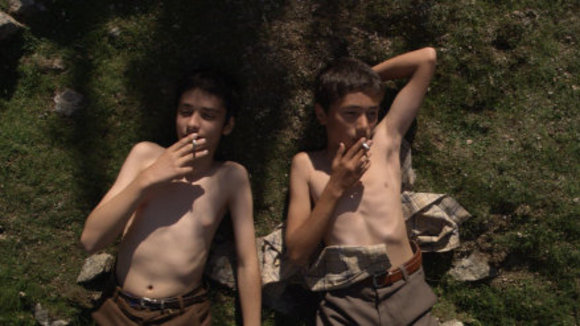
Set in a remote village nestled between mountains and the sea, “Times and Winds” follows the lives of three children—Ömer, Yakup, and Yıldız—each grappling with their own personal struggles and desires. The film is structured around the five daily Islamic prayer times, using these moments to frame the unfolding events and internal conflicts experienced by the children and their families.

Ömer harbors resentment towards his father, the village imam, and dreams of escaping his oppressive environment. Yakup is infatuated with his teacher and silently suffers from unrequited love, while Yıldız navigates the challenges of growing up and taking on responsibilities within her family. As the film progresses, these young characters confront the harsh realities of life and the complexities of human relationships.

Themes and Symbolism

“Times and Winds” is a profound exploration of the intersection between human emotions and the natural world. The film’s director, Reha Erdem, masterfully uses the rural landscape to reflect the inner lives of the characters, capturing the beauty and brutality of nature. The cyclical nature of the five prayer times serves as a metaphor for the rhythms of life, emphasizing themes of continuity, change, and the inevitable passage of time.

The film also delves into the intricacies of family dynamics and societal expectations, highlighting the tension between tradition and individual aspirations. Through its nuanced portrayal of childhood and adolescence, “Times and Winds” captures the innocence, curiosity, and turmoil that define the transition from childhood to adulthood.

Impact and Reception

“Times and Winds” was widely acclaimed for its artistic vision and emotional depth. It received numerous awards and accolades at international film festivals, praised for its evocative imagery and the director’s ability to convey profound themes through subtle storytelling. The film’s contemplative pace and rich visual style invite viewers to reflect on their own experiences and the universal aspects of human life.

Conclusion

“Times and Winds” is a cinematic masterpiece that transcends cultural boundaries, offering a poignant and poetic exploration of human emotions and the natural world. Through its beautifully crafted narrative and stunning visuals, the film invites audiences to pause and reflect on the rhythms of life, the passage of time, and the enduring connections that shape our existence. This film is a testament to the power of cinema to evoke deep emotions and provoke thoughtful introspection.

So Young (2013): A Nostalgic Journey Through Youth & Love

ist-pasion.com – “So Young” (致我们终将逝去的青春), released in 2013, is a Chinese coming-of-age romantic drama that captured the hearts of audiences with its poignant storytelling and relatable themes. Directed by Zhao Wei in her directorial debut, the film is an adaptation of the popular novel by Xin Yiwu. It delves into the complexities of youth, love, and the inevitable passage of time.

Plot Summary

“So Young” follows the life of Zheng Wei, a spirited young woman who enters college with dreams and aspirations. The film chronicles her experiences as she navigates friendships, romantic entanglements, and personal growth. Zheng Wei’s journey is marked by her love for Chen Xiaozheng, a brilliant but emotionally distant architecture student, and her complicated friendship with her roommate, Ruan Guan. As the characters confront the challenges of adulthood, the film explores themes of ambition, heartbreak, and the bittersweet nostalgia of youth.

Critical Reception

The film was well-received for its authentic portrayal of university life and its ability to evoke emotions through its narrative and characters. Zhao Wei’s direction was praised for capturing the essence of youthful exuberance and the nostalgic longing for simpler times. The performances, particularly those of the lead actors, contributed to the film’s emotional depth and resonance with audiences.

Impact on Chinese Cinema

“So Young” was a commercial success, resonating with both young audiences and those nostalgic for their own college days. It sparked a trend of coming-of-age films in China, highlighting the universal appeal of stories about youth and self-discovery. The film’s success solidified Zhao Wei’s reputation as a talented director and demonstrated the potential of literary adaptations in Chinese cinema.

Conclusion

“So Young” remains an enduring favorite, celebrated for its heartfelt exploration of the joys and sorrows of growing up. Its portrayal of love and friendship, set against the backdrop of a rapidly changing society, continues to resonate with viewers, making it a significant work in the landscape of modern Chinese film.

Inglourious Basterds: A Cinematic Masterpiece

ist-pasion.com – “Inglourious Basterds,” directed by Quentin Tarantino, is a film that defies conventional storytelling through its unique blend of historical fiction and dark comedy. Released in 2009, this movie offers a reimagined narrative of World War II, characterized by Tarantino’s signature style of sharp dialogue, intense violence, and unexpected twists.

Plot Overview

The film unfolds in Nazi-occupied France and follows two main storylines that converge in a dramatic climax. The first involves a group of Jewish-American soldiers known as the “Basterds,” led by Lieutenant Aldo Raine, who embark on a mission to instill fear in the Nazis through brutal tactics. The second story centers around Shosanna Dreyfus, a young Jewish woman who seeks revenge against the Nazis after witnessing the massacre of her family. Her plan culminates in a plot to assassinate high-ranking Nazi officials during a film premiere at her cinema.

Characters and Performances

“Inglourious Basterds” boasts a diverse ensemble cast, each delivering memorable performances. Christoph Waltz, in particular, stands out as Colonel Hans Landa, a cunning and charismatic SS officer. His portrayal earned him an Academy Award for Best Supporting Actor. Brad Pitt’s portrayal of the fearless and eccentric Lieutenant Aldo Raine adds a layer of humor and bravado to the film. Mélanie Laurent’s performance as Shosanna Dreyfus provides emotional depth and intensity, driving the film’s central theme of vengeance.

Themes and Style

Tarantino’s film explores themes of revenge, justice, and the power of cinema. By rewriting history, the film challenges traditional narratives and invites viewers to reconsider the moral complexities of war. The film’s style is unmistakably Tarantino, with its non-linear storytelling, witty dialogue, and meticulous attention to detail. The use of music, particularly Ennio Morricone’s compositions, enhances the film’s tension and drama.

Critical Reception and Impact

“Inglourious Basterds” received critical acclaim for its originality, direction, and performances. It was nominated for eight Academy Awards and has since become a cult classic. The film’s success further cemented Quentin Tarantino’s reputation as a master filmmaker and showcased his ability to blend genres and craft compelling narratives.

Conclusion

“Inglourious Basterds” remains an iconic film in modern cinema, celebrated for its bold storytelling and unforgettable characters. By offering an alternate history with a provocative twist, Tarantino invites audiences to reflect on the nature of storytelling itself. Whether admired for its artistic brilliance or critiqued for its historical liberties, the film continues to captivate and intrigue viewers around the world.

The Layers of “Pink”: A Powerful Social Commentary

ist-pasion.com – “Pink,” a 2016 Indian courtroom drama directed by Aniruddha Roy Chowdhury, is a compelling film that explores critical social issues related to gender, consent, and justice. The film has been widely acclaimed for its bold narrative, strong performances, and its unflinching portrayal of the struggles women face in society. With its gripping storyline and thought-provoking themes, “Pink” stands as a significant contribution to Indian cinema.

Plot Overview

The narrative of “Pink” revolves around three young women, Minal Arora (played by Taapsee Pannu), Falak Ali (Kirti Kulhari), and Andrea Tariang, who find themselves entangled in a legal battle after a night out with a group of influential men takes a violent turn. The situation escalates when Minal is accused of attempting to murder one of the men, leading to a complex courtroom drama that challenges societal norms and perceptions of women’s rights.

Characters and Performances

The film features a stellar cast, with Amitabh Bachchan delivering a standout performance as Deepak Sehgal, a retired lawyer who comes out of retirement to defend the young women. His portrayal of the determined and principled lawyer adds depth to the narrative. Taapsee Pannu, Kirti Kulhari, and Andrea Tariang offer powerful performances, portraying their characters’ vulnerability and strength with authenticity and conviction.

Cinematic Elements

Shot primarily in Delhi, the film captures the essence of urban life and the contrasting realities faced by women in contemporary society. The cinematography by Abhik Mukhopadhyay is understated yet effective, focusing on the emotional intensity of courtroom scenes. The music and background score by Shantanu Moitra further enhance the film’s dramatic impact, adding layers to the unfolding narrative.

Themes and Symbolism

“Pink” addresses critical themes such as consent, women’s autonomy, and the pervasive patriarchal mindset. The film’s tagline, “No means no,” underscores its central message, emphasizing the importance of respecting a woman’s choice and voice. Through its courtroom drama, “Pink” highlights the prejudices and biases that women face, urging a reevaluation of societal attitudes and legal frameworks.

Conclusion

“Pink” is more than just a courtroom drama; it is a powerful social commentary that challenges deeply ingrained stereotypes and advocates for justice and equality. The film’s realistic portrayal of gender dynamics and its impactful narrative have sparked important conversations about women’s rights and societal change. As a cinematic landmark, “Pink” continues to inspire audiences and filmmakers alike, encouraging a more inclusive and equitable society.

The Fault in Our Stars: A Poignant Journey of Love and Resilience

ist-pasion.com – “The Fault in Our Stars,” a novel by John Green, has touched the hearts of millions with its compelling story of love, illness, and the human spirit. Published in 2012, this modern classic follows the lives of two teenagers, Hazel Grace Lancaster and Augustus Waters, who meet at a cancer support group and embark on a life-altering journey together. The novel explores themes of love, mortality, and the search for meaning in life.

The Characters: Hazel and Augustus

At the heart of the novel are its protagonists, Hazel and Augustus. Hazel, a sixteen-year-old with thyroid cancer that has spread to her lungs, is a thoughtful and introspective character who often contemplates the meaning of life and death. Augustus, a charming and optimistic cancer survivor, brings a sense of adventure and hope into Hazel’s life. Their relationship is central to the narrative, showcasing the transformative power of love.

The Meeting: A Chance Encounter

Hazel and Augustus meet at a cancer support group, where their connection is instant and profound. Despite their shared experiences with illness, they bring different perspectives to their relationship. Augustus’s zest for life and desire to leave a mark on the world contrasts with Hazel’s more cautious and pragmatic outlook. This dynamic sets the stage for their emotional journey.

The Journey: Amsterdam and Beyond

A pivotal part of the novel is the trip to Amsterdam, where Hazel and Augustus seek answers from Peter Van Houten, the reclusive author of Hazel’s favorite book, “An Imperial Affliction.” The journey represents their quest for closure and understanding, both in the context of the book and their own lives. The trip is filled with moments of beauty and heartbreak, deepening their bond and challenging their perceptions of love and mortality.

The Themes: Love, Loss, and Legacy

“The Fault in Our Stars” delves into profound themes that resonate with readers of all ages. Love is portrayed as a powerful force that transcends the physical limitations imposed by illness. The novel also confronts the inevitability of loss, highlighting the importance of cherishing each moment. Through Hazel and Augustus’s story, readers are encouraged to consider what it means to leave a legacy and how to find meaning in the face of adversity.

The Conclusion: A Lasting Impact

The novel’s conclusion is both heartrending and uplifting, leaving readers with a sense of hope and reflection. Augustus’s passing is a devastating loss, yet it underscores the novel’s message about the enduring impact of love and human connection. Hazel’s journey of self-discovery and acceptance serves as a reminder of the resilience of the human spirit.

Conclusion: A Modern Classic

“The Fault in Our Stars” is a poignant and beautifully written novel that captures the complexities of life, love, and loss. John Green’s masterful storytelling and memorable characters have made this book a beloved modern classic. Through its exploration of deep and universal themes, the novel continues to inspire and resonate with readers, reminding us all of the power of love and the importance of living life to the fullest.