
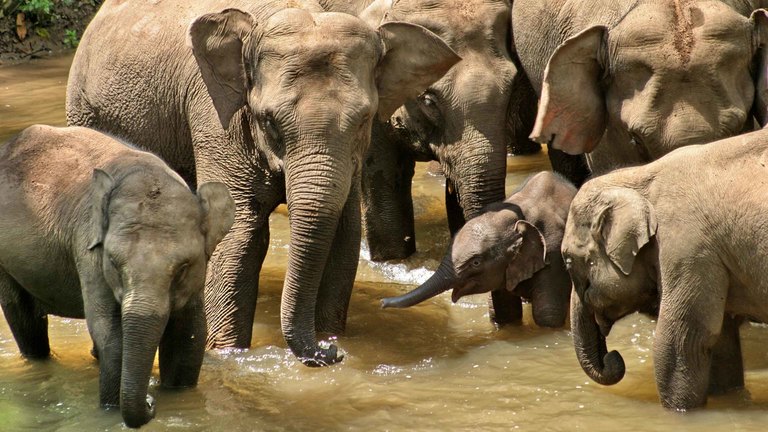
ist-pasion.com – Elephants, with their immense size, intelligence, and social structures, are among the most fascinating and beloved animals on the planet. Revered in many cultures for their strength and wisdom, elephants have captivated the human imagination for centuries. This article explores the different species of elephants, their physical characteristics, behaviors, and the conservation challenges they face in the modern world.
Physical Characteristics
Elephants are the largest land mammals, with two distinct species: the African elephant (Loxodonta africana) and the Asian elephant (Elephas maximus). Both species share several notable physical traits, including their large ears, trunk, and tusks, but there are some differences between them.
- African elephants are larger than their Asian relatives and have more expansive ears shaped like the African continent. Their trunks are incredibly versatile, capable of performing a wide range of tasks from picking up food to drinking water and communicating with other elephants.
- Asian elephants are smaller in size and have rounder ears compared to their African counterparts. Their trunks are similarly long and strong but tend to be somewhat shorter and less dexterous.
Both species have tusks, which are elongated incisors, and while both males and females of the African species typically have tusks, only male Asian elephants have them. Elephants’ thick skin is grayish in color, with folds and wrinkles that help retain moisture and protect against sun exposure.
Habitat and Distribution
Elephants are native to both Africa and Asia, each species occupying distinct regions. African elephants are found across sub-Saharan Africa, where they inhabit a variety of environments, including savannas, forests, and deserts. These elephants are more widely distributed than their Asian relatives and are found in countries such as Botswana, Kenya, Tanzania, and South Africa.
Asian elephants, on the other hand, are mostly found in forested areas across South and Southeast Asia, including India, Sri Lanka, Nepal, Thailand, and parts of Indonesia. Their habitats include tropical forests, grasslands, and wetlands.
Despite the wide range of habitats they occupy, both African and Asian elephants face challenges due to human activities, including habitat loss, human-wildlife conflict, and poaching for their tusks and other body parts.
Social Structure and Behavior
Elephants are known for their complex social structures, which are based on strong family bonds. In African elephants, herds are typically led by an older, experienced matriarch, often the oldest female in the group. These herds consist of related females and their offspring, and they are highly cooperative, working together to protect each other from predators and to care for the young.
Male elephants, called bulls, usually leave the herd when they reach maturity and tend to lead more solitary lives, only rejoining females for mating. However, bulls may also form loose bachelor groups.
Asian elephant social structures are somewhat similar but may be less rigid. Female Asian elephants live in matriarchal groups, while males also tend to live solitary lives, coming together with females only during the mating season.
Elephants are highly intelligent animals, capable of using tools, solving complex problems, and exhibiting emotions such as empathy and grief. They communicate through a variety of sounds, including trumpets, rumbles, and low-frequency vibrations, and they use their trunks to touch and interact with other elephants, conveying affection, reassurance, and social bonds.
Diet and Feeding Habits
Elephants are herbivores and play a crucial role in shaping their environment through their feeding habits. They are known as “keystone species” because their actions help maintain the balance of their ecosystems. Elephants can consume up to 300 pounds (136 kilograms) of vegetation each day, including grasses, fruits, leaves, bark, and twigs.
Their trunks are highly sensitive and act as a powerful tool for picking up food, sucking up water, and even socializing with others. Elephants have large molars that help them chew tough plant material, but they are also known to consume large amounts of water, sometimes drinking up to 50 gallons (190 liters) per day.
In addition to their role in plant consumption, elephants help disperse seeds through their droppings, which supports the regeneration of many plant species in their habitats. Their feeding habits also shape the landscape, as they sometimes uproot trees and create open spaces that benefit other species.
Conservation Status and Threats
Elephants face significant threats to their survival, primarily from habitat loss, poaching, and human-wildlife conflict. African elephants, particularly forest elephants, have seen a dramatic decline in population due to the ivory trade, which remains a major issue despite international bans on ivory sales. The African elephant population is currently listed as “Vulnerable” by the International Union for Conservation of Nature (IUCN), with certain populations, such as the forest elephant, critically endangered.
Asian elephants are also classified as “Endangered” by the IUCN, with their numbers dwindling due to habitat destruction, fragmentation, and human-wildlife conflict. In some regions, Asian elephants are forced to migrate through agricultural areas, where they can come into conflict with farmers. Habitat loss due to deforestation and the conversion of land for agriculture further exacerbates the challenges faced by Asian elephant populations.
Conservation efforts for elephants have become a global priority. These efforts include anti-poaching initiatives, habitat preservation, and strengthening the enforcement of international bans on the ivory trade. In some areas, human-elephant conflict mitigation strategies, such as the use of barriers or creating wildlife corridors, are helping to reduce the negative impact of human activities on elephant populations.
Conclusion
Elephants are truly magnificent creatures, known for their size, intelligence, and social bonds. Their roles as ecosystem engineers and keystone species are invaluable to the health of their environments. However, these majestic animals are facing numerous challenges, and their survival depends on continued conservation efforts, habitat protection, and global cooperation to combat poaching and the ivory trade.
By supporting conservation initiatives and promoting awareness about the plight of elephants, we can help ensure that future generations of these remarkable creatures continue to roam the earth, playing their essential role in maintaining the balance of nature.
