The Layers of “Pink”: A Powerful Social Commentary

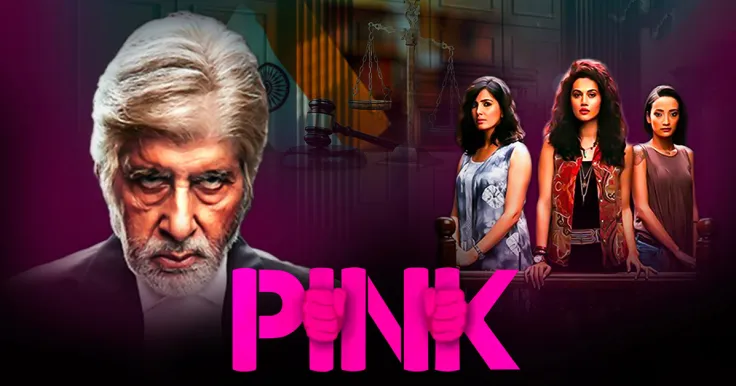
ist-pasion.com – “Pink,” a 2016 Indian courtroom drama directed by Aniruddha Roy Chowdhury, is a compelling film that explores critical social issues related to gender, consent, and justice. The film has been widely acclaimed for its bold narrative, strong performances, and its unflinching portrayal of the struggles women face in society. With its gripping storyline and thought-provoking themes, “Pink” stands as a significant contribution to Indian cinema.

Plot Overview

The narrative of “Pink” revolves around three young women, Minal Arora (played by Taapsee Pannu), Falak Ali (Kirti Kulhari), and Andrea Tariang, who find themselves entangled in a legal battle after a night out with a group of influential men takes a violent turn. The situation escalates when Minal is accused of attempting to murder one of the men, leading to a complex courtroom drama that challenges societal norms and perceptions of women’s rights.

Characters and Performances

The film features a stellar cast, with Amitabh Bachchan delivering a standout performance as Deepak Sehgal, a retired lawyer who comes out of retirement to defend the young women. His portrayal of the determined and principled lawyer adds depth to the narrative. Taapsee Pannu, Kirti Kulhari, and Andrea Tariang offer powerful performances, portraying their characters’ vulnerability and strength with authenticity and conviction.

Cinematic Elements

Shot primarily in Delhi, the film captures the essence of urban life and the contrasting realities faced by women in contemporary society. The cinematography by Abhik Mukhopadhyay is understated yet effective, focusing on the emotional intensity of courtroom scenes. The music and background score by Shantanu Moitra further enhance the film’s dramatic impact, adding layers to the unfolding narrative.

Themes and Symbolism

“Pink” addresses critical themes such as consent, women’s autonomy, and the pervasive patriarchal mindset. The film’s tagline, “No means no,” underscores its central message, emphasizing the importance of respecting a woman’s choice and voice. Through its courtroom drama, “Pink” highlights the prejudices and biases that women face, urging a reevaluation of societal attitudes and legal frameworks.

Conclusion

“Pink” is more than just a courtroom drama; it is a powerful social commentary that challenges deeply ingrained stereotypes and advocates for justice and equality. The film’s realistic portrayal of gender dynamics and its impactful narrative have sparked important conversations about women’s rights and societal change. As a cinematic landmark, “Pink” continues to inspire audiences and filmmakers alike, encouraging a more inclusive and equitable society.

The Bee’s Dance: The Social Butterfly

ist-pasion.com – In the world of insects, bees stand out as social butterflies, communicating through a fascinating array of signals and behaviors. Among these, the most well-known is the bee’s dance, a complex form of communication that plays a crucial role in the life of a hive. This dance is not just a random fluttering but a precise and intricate language that conveys vital information to other members of the colony.

The Purpose of the Bee’s Dance

The primary purpose of the bee’s dance is to communicate the location of food sources to other members of the hive. Forager bees, upon discovering a rich source of nectar or pollen, return to the hive and perform a dance that indicates the direction and distance of the food source. This ensures that the colony can efficiently exploit the resources, supporting the survival and growth of the hive.

Decoding the Waggle Dance

One of the most studied and understood forms of the bee’s dance is the waggle dance. This dance consists of a series of movements that form a figure-eight pattern. The angle of the dance relative to the vertical comb informs the direction of the food source in relation to the sun, while the duration of the waggle run indicates the distance. The vigor and repetition of the dance also signal the quality of the food source, with more enthusiastic dances for richer sources.

The Role of the Dance in Colony Coordination

The bee’s dance is a testament to the sophisticated social organization of bees. It allows the colony to coordinate foraging efforts, ensuring that resources are utilized efficiently. This communication also helps in the selection of new nest sites during swarming, with scout bees performing dances to indicate the suitability and location of potential homes.

The Impact of Environmental Factors on Bee Communication

Environmental factors such as climate change, habitat loss, and pesticide use can disrupt the delicate communication systems of bees. Changes in flowering patterns due to climate change can make it difficult for bees to accurately communicate the location of food sources. Similarly, habitat fragmentation can increase the distance bees need to travel for foraging, affecting the precision of the dance communication.

Conserving the Social Butterflies

To protect bees and their intricate communication systems, it is essential to address the environmental challenges they face. Conservation efforts should focus on preserving natural habitats, promoting sustainable agricultural practices, and reducing the use of harmful pesticides. By creating a supportive environment for bees, we can ensure that these social butterflies continue to thrive, pollinate our crops, and inspire us with their complex dances for generations to come.